

Introduction: Popular Games — The Pulse of Modern Digital Entertainment
The term popular games has evolved into a defining element of today’s digital culture, influencing how millions of people spend their time, interact with others, and experience entertainment. What was once considered a niche hobby has now transformed into a global industry that rivals movies, music, and even sports in both reach and revenue. From mobile screens to high-end gaming consoles, popular games are everywhere—accessible, engaging, and increasingly hard to ignore.
One of the key reasons behind the rapid rise of popular games is their ability to combine technology with human psychology. These games are designed not just to entertain but to captivate. With immersive storylines, real-time multiplayer features, and reward-driven systems, they create an environment where players feel both challenged and accomplished. Whether it’s a quick five-minute session on a smartphone or hours spent in a competitive online arena, popular games offer experiences tailored to every type of player.
However, the growing influence of popular games also raises important questions. Are they simply a source of fun and relaxation, or have they become a powerful force shaping behavior, habits, and even mental health? While many celebrate their benefits—such as improved cognitive skills, social connectivity, and new career opportunities—others highlight concerns like addiction, screen dependency, and reduced real-world engagement.
In this article, we will explore the world of popular games from every angle—understanding why they attract millions, how they impact our lives, and what their future might look like. By the end, you’ll have a clearer perspective on whether popular games are a positive revolution in entertainment or a growing digital challenge that demands awareness and balance.
The Evolution of Popular Games: From Pixels to Powerful Worlds
The journey of popular games is a story of constant innovation and transformation. What began as simple pixel-based entertainment has grown into a highly sophisticated digital ecosystem that blends storytelling, technology, and human interaction. Understanding this evolution helps explain why popular games hold such a strong grip on modern audiences.
Early Beginnings: Simplicity That Sparked a Revolution
In the early days, games were straightforward and limited by technology. Basic graphics, simple mechanics, and single-player experiences defined the era. Yet, even with these limitations, they captured attention because they introduced something new—interactive entertainment.
These early popular games focused on:
- Quick gameplay loops
- Easy-to-understand objectives
- Local, often solo experiences
Despite their simplicity, they laid the foundation for what would become a global phenomenon.
The Rise of Consoles and Immersive Storytelling
As technology advanced, gaming consoles brought a major shift. Popular games began to include deeper narratives, complex characters, and expansive worlds. Players were no longer just playing—they were experiencing stories.
This era introduced:
- Story-driven gameplay
- Richer graphics and sound design
- Multiplayer modes with friends
Popular games started to feel more like interactive movies, pulling players emotionally into their worlds.
The Internet Era: Connecting the World Through Games
The introduction of online connectivity completely changed the definition of popular games. No longer limited to solo or local play, games became global platforms where millions could interact simultaneously.
Key developments included:
- Online multiplayer modes
- Global leaderboards and rankings
- Real-time communication between players
This shift turned popular games into social experiences, where friendships, rivalries, and communities were formed.
Mobile Gaming Explosion: Popular Games in Every Pocket
The rise of smartphones made popular games more accessible than ever. People no longer needed expensive consoles or PCs—games were now available anytime, anywhere.
Mobile popular games are known for:
- Short, engaging gameplay sessions
- Easy accessibility
- Massive global reach
This accessibility significantly expanded the gaming audience, bringing in players from all age groups and backgrounds.
Modern Era: Hyper-Realism and Endless Engagement
Today, popular games are more advanced than ever. High-definition graphics, artificial intelligence, and massive online worlds have created deeply immersive experiences.
Modern popular games feature:
- Open-world environments
- Competitive esports scenes
- Live updates and evolving content
- Cross-platform play
These elements ensure that players remain engaged for longer periods, making gaming not just a pastime but a continuous experience.
A Turning Point in Entertainment
The evolution of popular games shows how far the industry has come—from simple развлечения to complex digital universes. But with this growth comes a deeper influence on daily life, habits, and even identity.
As popular games continue to evolve, one thing remains clear: they are no longer just games—they are a powerful force shaping the future of entertainment.
Why Popular Games Are So Addictive: The Psychology Behind the Screen
The massive success of popular games is not just about graphics or storytelling—it’s deeply rooted in human psychology. These games are carefully designed to keep players engaged, motivated, and often coming back for more. While this makes them highly enjoyable, it also explains why many players find them difficult to put down.
The Reward System: Small Wins, Big Impact
One of the strongest hooks in popular games is the reward mechanism. Players are constantly given incentives—points, levels, achievements, virtual items—that create a sense of progress and accomplishment.
Each small win triggers a release of dopamine in the brain, the chemical associated with pleasure and motivation. This makes players feel good and encourages them to continue playing. Over time, this cycle can become habit-forming.
Progression and Goals: Always Something to Chase
Popular games are built around structured progression systems. Whether it’s unlocking a new level, upgrading a character, or reaching a higher rank, there is always a goal waiting ahead.
This creates:
- A sense of purpose
- Continuous motivation
- Long-term engagement
Players feel invested because their time and effort translate into visible progress, making it harder to stop midway.
Social Pressure and Competition
Many popular games include multiplayer features that connect players with friends or strangers. This introduces a powerful social element.
Players often experience:
- Peer pressure to stay active
- Desire to outperform others
- Fear of missing out (FOMO) on events or updates
Competitive rankings and leaderboards amplify this effect, pushing players to keep improving and playing regularly.
Immersive Design and Escapism
Modern popular games are designed to pull players into alternate realities. With detailed environments, engaging storylines, and realistic interactions, players can temporarily forget about real-world stress.
This escapism can be beneficial in moderation, but it also increases dependency when players begin to prefer virtual experiences over real-life responsibilities.
Time Distortion: Losing Track of Reality
A common experience among gamers is losing track of time. Popular games are structured in a way that makes “just one more round” feel harmless—but it often leads to extended sessions.
This happens because:
- Gameplay loops are continuous
- Breakpoints are intentionally minimal
- Engagement remains consistently high
As a result, hours can pass without the player realizing it.
The Dark Loop: When Engagement Turns Into Dependency
While the design of popular games makes them enjoyable, it can also lead to overuse. The combination of rewards, competition, and immersion creates a loop that can be hard to break.
Warning signs include:
- Playing longer than intended
- Neglecting responsibilities
- Feeling restless without gaming
- Prioritizing games over real-life interactions
This is where the line between entertainment and addiction begins to blur.
A Fine Line Between Fun and Control
Popular games are not inherently harmful—their impact depends on how they are used. Understanding the psychology behind them gives players the awareness needed to stay in control.
When approached mindfully, popular games can remain a source of enjoyment and creativity. But without boundaries, the same elements that make them exciting can turn them into a powerful distraction.
Positive vs Negative Impact of Popular Games: A Double-Edged Experience
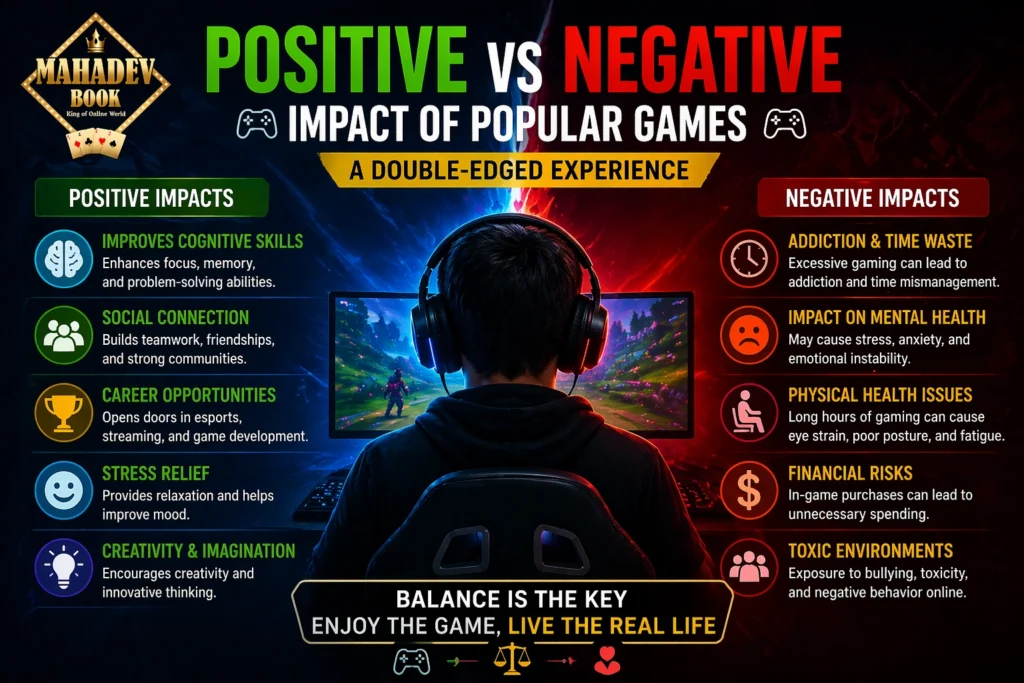
The world of popular games is filled with excitement, innovation, and opportunity—but it also comes with challenges that cannot be ignored. While millions of players enjoy gaming as a healthy form of entertainment, others experience its downsides when usage becomes excessive. To truly understand popular games, it’s essential to look at both sides of the equation.
The Positive Side of Popular Games
Popular games, when played in moderation, can offer meaningful benefits that go beyond simple entertainment.
1. Cognitive and Problem-Solving Skills
Many popular games require players to think critically, make quick decisions, and adapt to changing situations. Strategy games, puzzles, and competitive formats sharpen mental agility and improve focus.
2. Stress Relief and Relaxation
For many people, gaming serves as a mental escape from daily stress. Engaging in a favorite game can help refresh the mind and improve overall mood after long or tiring days.
3. Social Connection and Teamwork
Online multiplayer popular games create opportunities for communication and collaboration. Players form teams, build friendships, and learn how to work together toward common goals—even across different countries.
4. Career and Financial Opportunities
Gaming is no longer just a hobby. The rise of esports, streaming, and content creation has opened doors for players to turn their passion into income. Professional gamers, streamers, and developers are now part of a rapidly growing industry.
5. Creativity and Imagination
Some popular games encourage players to build, design, and create their own worlds. This fosters creativity and allows individuals to express themselves in unique ways.
The Negative Side of Popular Games
Despite these advantages, popular games also have a darker side—especially when balance is lost.
1. Addiction and Time Mismanagement
One of the biggest concerns is excessive gaming. Players may spend hours playing without realizing how much time has passed, leading to poor time management and reduced productivity.
2. Impact on Mental Health
While gaming can reduce stress, overuse can have the opposite effect. Frustration, anxiety, and emotional dependency on in-game success can affect mental well-being.
3. Physical Health Issues
Long gaming sessions often mean sitting for extended periods. This can lead to problems like eye strain, poor posture, sleep disturbances, and reduced physical activity.
4. Financial Risks
Many popular games include in-game purchases, skins, or upgrades. Players—especially younger ones—may spend significant amounts of money without realizing the long-term impact.
5. Exposure to Toxic Environments
Online gaming communities can sometimes include negative behavior such as harassment, bullying, or toxic competition, which can affect players emotionally.
The Balance That Matters Most
The impact of popular games ultimately depends on how they are used. The same game that improves skills and relieves stress can also become harmful if it dominates a person’s routine.
A balanced approach includes:
- Setting time limits
- Taking regular breaks
- Avoiding excessive spending
- Prioritizing real-life responsibilities
Final Thought on Impact
Popular games are neither entirely good nor entirely bad—they are tools of entertainment with powerful influence. When used responsibly, they can enrich lives, build skills, and create opportunities. But when control is lost, they can lead to negative consequences that affect both personal and social well-being.
Understanding this balance is the key to making the most out of the ever-growing world of popular games.
Top Popular Games in the World: Titles That Define the Industry
The world of popular games is vast, but certain titles have managed to rise above the rest, capturing millions—sometimes billions—of players globally. These games are not just successful; they define trends, influence culture, and set new standards for the gaming industry.
Below are some of the most impactful and widely played popular games that continue to dominate the digital landscape.
Battle Royale Giants
Battle royale games have revolutionized online multiplayer experiences by combining survival, strategy, and competition.
- Fortnite
Known for its vibrant graphics and constant updates, it blends shooting mechanics with creative building elements. Events and collaborations keep it fresh and culturally relevant. - PUBG: Battlegrounds
A more realistic take on the genre, it popularized large-scale survival matches and intense tactical gameplay. - Call of Duty: Warzone
Combines fast-paced action with high-quality visuals and smooth mechanics, attracting both casual and competitive players.
Open-World and Sandbox Experiences
These popular games give players freedom to explore, create, and shape their own adventures.
- Minecraft
A global phenomenon that allows players to build and explore endless worlds. Its simplicity and creativity make it appealing to all age groups. - Grand Theft Auto V
Known for its massive open world and engaging storyline, along with a highly popular online mode that continues to evolve.
Competitive Multiplayer and Esports Titles
These popular games dominate the esports scene and attract highly competitive communities.
- League of Legends
A strategic team-based game with a massive global player base and one of the largest esports ecosystems. - Dota 2
Known for its depth and complexity, it features high-level competitive gameplay and record-breaking tournament prizes. - Counter-Strike 2
A modern evolution of the classic shooter, focusing on precision, teamwork, and competitive balance.
Mobile Gaming Sensations
Mobile platforms have made popular games accessible to billions of users worldwide.
- Clash of Clans
A strategic base-building game that has maintained popularity for years through updates and community engagement. - Candy Crush Saga
One of the most widely played puzzle games, known for its simple mechanics and addictive progression. - Free Fire
Especially popular in regions like India, offering fast-paced matches optimized for mobile devices.
Why These Popular Games Stand Out
These titles share common qualities that contribute to their success:
- Engaging gameplay loops that keep players returning
- Regular updates that introduce new content
- Strong communities that enhance social interaction
- Cross-platform accessibility for wider reach
They are not just games—they are ecosystems where players spend time, build identities, and form connections.
More Than Just Entertainment
Popular games today are cultural landmarks. They influence fashion, music, and even language. From in-game concerts to global tournaments, these games extend far beyond the screen.
Closing Insight
The success of these popular games highlights how diverse the gaming world has become. Whether someone enjoys creativity, competition, or casual play, there is a game designed for them.
As new titles continue to emerge, the list of popular games will keep evolving—but their impact on digital culture is here to stay.
The Future of Popular Games: Innovation, Immersion, and Uncertainty
As technology continues to evolve, the future of popular games is heading toward a level of innovation that once seemed impossible. Gaming is no longer just about playing—it’s about experiencing, interacting, and even living within digital environments. However, with these advancements come both exciting opportunities and serious concerns.
Hyper-Immersive Experiences
The next generation of popular games will focus heavily on immersion. With advancements in virtual reality (VR) and augmented reality (AR), players will no longer just control characters—they will feel like they are inside the game world.
Future popular games may include:
- Fully interactive 3D environments
- Realistic sensory feedback (haptics, motion tracking)
- Seamless blending of real and virtual worlds
This level of immersion will make gaming more engaging—but also more difficult to step away from.
Artificial Intelligence and Smarter Gameplay
Artificial intelligence is expected to redefine how popular games function. Instead of predictable patterns, games will feature intelligent systems that adapt to player behavior.
This could lead to:
- More realistic non-player characters (NPCs)
- Dynamic storylines that change based on decisions
- Personalized gaming experiences
While this makes games more exciting, it also increases their ability to keep players deeply engaged for longer periods.
Cloud Gaming and Accessibility
The rise of cloud gaming will remove the need for expensive hardware. Players will be able to access popular games instantly on almost any device with an internet connection.
Benefits include:
- Greater accessibility for global audiences
- Lower entry barriers for new players
- Instant updates and seamless gameplay
This means popular games will reach even wider audiences, further increasing their influence.
The Expansion of Esports and Digital Careers
Esports is expected to grow even larger, turning popular games into full-scale professional industries. Competitive gaming, streaming, and content creation will continue to offer career opportunities.
Future trends may include:
- Larger global tournaments
- Increased sponsorship and investment
- Integration with mainstream sports and media
Gaming will not just be entertainment—it will be a profession for many.
Concerns and Ethical Challenges
While the future of popular games is promising, it also raises important questions.
Addiction Risks
As games become more immersive and engaging, the risk of overuse may increase. Developers and platforms will need to take responsibility for promoting healthy usage.
Data Privacy
With more online connectivity, player data becomes valuable. Ensuring privacy and security will be a major challenge.
Monetization Practices
In-game purchases and microtransactions may become more advanced, raising concerns about fairness and financial exploitation.
A Future That Demands Balance
The future of popular games is not just about technology—it’s about responsibility. Players, developers, and society must work together to ensure that gaming remains a positive force.
The key will be:
- Responsible game design
- Awareness among players
- Healthy gaming habits
Looking Ahead
Popular games are set to become even more powerful, immersive, and influential. They will shape how people learn, socialize, and entertain themselves in the coming years.
But one question will always remain:
Will popular games continue to enhance our lives—or will they begin to control them?
The answer depends not on technology, but on how we choose to use it.
Conclusion: Popular Games in a World That Never Logs Out
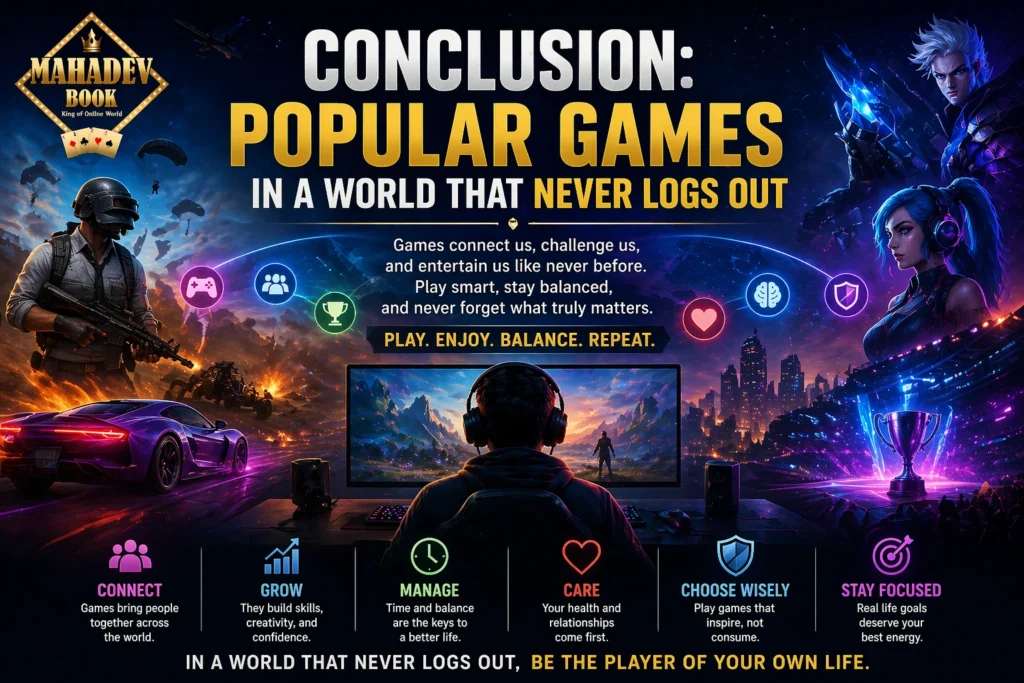
The journey through popular games reveals something deeper than just entertainment. What started as simple digital fun has grown into a powerful global force—shaping habits, conversations, and even lifestyles. Games today are not limited to screens; they influence how people think, connect, and spend their time.
There is no denying the excitement they bring. They offer moments of achievement, creativity, and connection that few other mediums can match. For many, they are a source of relaxation and inspiration. For others, they open doors to careers and communities that didn’t exist before.
At the same time, the risks quietly exist alongside the rewards. When boundaries fade, what begins as enjoyment can turn into distraction. Time slips away, priorities shift, and the balance between virtual and real life becomes harder to maintain. This is where awareness matters most—not fear, but understanding.
The future will only deepen this relationship between people and digital play. Experiences will become richer, more interactive, and more integrated into everyday life. But no matter how advanced games become, the responsibility will always remain with the player.
In the end, games are tools. They can energize or exhaust, connect or isolate, inspire or overwhelm. The difference lies in how they are used.
So rather than asking whether gaming is good or bad, a better question emerges—how much control do we keep while enjoying it?
Because in a world that never logs out, knowing when to pause might be the most powerful move of all.
Frequently Asked Questions (FAQs) About Popular Games
1. What are popular games?
Popular games are video games that attract a large number of players worldwide due to their engaging gameplay, accessibility, and strong community presence. These games can be played on mobile devices, PCs, or consoles and often include multiplayer features.
2. Why are popular games so addictive?
Popular games are designed with reward systems, progression levels, and social interaction features that keep players engaged. These elements create a cycle of motivation and satisfaction, making it hard for players to stop.
3. Are popular games good for mental health?
In moderation, popular games can help reduce stress, improve mood, and enhance cognitive skills. However, excessive gaming may lead to negative effects such as anxiety, lack of focus, and sleep disturbances.
4. Can playing popular games become a career?
Yes, gaming has evolved into a professional field. Players can earn through esports, streaming, content creation, and even game development. Many individuals are turning gaming into a full-time career.
5. How can I play popular games responsibly?
To maintain balance:
- Set daily time limits
- Take regular breaks
- Avoid overspending on in-game purchases
- Focus on real-life responsibilities first
Responsible gaming ensures long-term enjoyment without negative impact.
6. Where can I explore more about online gaming platforms?
You can explore platforms like mahadevcricketidlive for additional gaming-related insights and services.
For fantasy sports and online gaming experiences, visit dream11global to learn more about how competitive gaming platforms work.
7. What is the future of popular games?
The future of popular games includes advancements like virtual reality, artificial intelligence, and cloud gaming. These technologies will make games more immersive, accessible, and interactive than ever before.