

Understanding Identification: Why It Matters in Everyday Life
Identification is something most people don’t think much about—until they suddenly need it. Whether you’re trying to open a bank account, enroll in a school, book a train ticket, or even check into a hotel, having a valid ID becomes essential. It acts as an official confirmation of who you are, helping institutions trust your identity without confusion or risk.
At its core, an ID is more than just a card or a document. It represents your presence in a formal system. Governments, organizations, and businesses rely on identification to keep records accurate and services secure. Without it, verifying a person’s identity would be difficult, leading to delays, misunderstandings, or even fraud.
In everyday life, IDs serve multiple purposes. For students, a school or college ID allows access to campus facilities and exams. For adults, government-issued IDs are often required for financial transactions, job applications, or travel. Even something as simple as picking up a parcel may require you to show proof of identity. In this way, IDs quietly support many routine activities.
Another important aspect of identification is security. In a world where personal data and transactions are increasingly digital, verifying identity has become more critical than ever. IDs help prevent unauthorized access and ensure that services are used by the right person. For example, when you link your ID to a bank account or mobile number, it reduces the chances of fraud and improves accountability.
For many people, creating their first ID is a significant milestone. It often marks a step toward independence—whether it’s applying for a driver’s license, registering for a national ID, or getting a passport. This process not only provides a document but also opens doors to opportunities that were previously out of reach.
It’s also worth noting that different types of IDs serve different purposes. A passport is mainly used for international travel, while a driver’s license allows you to legally operate a vehicle. National ID cards, on the other hand, are widely used for general identification within a country. Understanding which ID you need depends on your personal goals and circumstances.
Despite their importance, many people feel unsure about how to create an ID, especially if they are doing it for the first time. The process may seem complicated because it involves documents, forms, and verification steps. However, once you understand the purpose behind each requirement, it becomes much easier to follow.
One common challenge is gathering the necessary documents. Proof of identity, proof of address, and photographs are usually required. These documents help authorities confirm that the information you provide is accurate. While it may take some effort to collect everything, this step is crucial for ensuring the reliability of the identification system.
Another factor to consider is accuracy. Small mistakes in your application—such as spelling errors or incorrect details—can lead to delays or even rejection. That’s why it’s important to review everything carefully before submitting your application. Taking a few extra minutes to double-check can save you a lot of time later.
In recent years, the process of creating an ID has become more convenient thanks to digital services. Many applications can now be completed online, reducing the need to visit offices in person. This has made it easier for people in remote areas or with busy schedules to apply without difficulty. However, even with online systems, the basic steps remain the same: provide correct information, submit required documents, and complete verification.
Ultimately, having a valid ID is not just about meeting requirements—it’s about being recognized and included in systems that shape daily life. From accessing services to proving your identity in important situations, an ID plays a vital role in ensuring smooth interactions and opportunities. Understanding its importance is the first step toward creating one with confidence.
Types of IDs You Can Create: Choosing the Right One for Your Needs
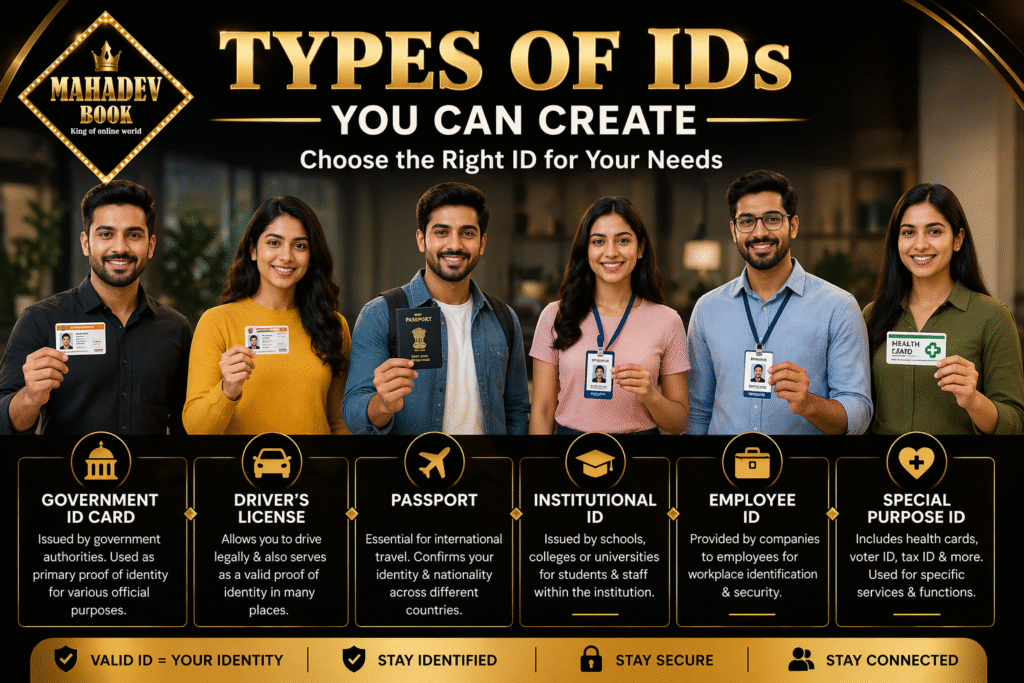
Before starting the process of creating an ID, it’s important to understand that not all identification documents serve the same purpose. Many people assume that one ID is enough for everything, but in reality, different situations require different types of identification. Knowing which ID you need can save time, effort, and unnecessary confusion during the application process.
One of the most common forms of identification is a government-issued ID card. This is typically provided by national or regional authorities and serves as a primary proof of identity for citizens. It is widely accepted across institutions, including banks, offices, and public services. For many individuals, this becomes their most frequently used ID because it is versatile and recognized almost everywhere within the country.
Another widely used identification document is the driver’s license. While its main purpose is to allow individuals to legally operate a vehicle, it also doubles as a valid proof of identity in many situations. A driver’s license usually contains a photograph, address, date of birth, and a unique identification number, making it suitable for both legal and everyday use. However, obtaining it requires passing certain tests, such as a written exam and a driving test, which may not be necessary for other types of IDs.
For those who plan to travel internationally, a passport is essential. Unlike other forms of ID, a passport is specifically designed for cross-border identification. It confirms your nationality and allows you to enter and exit different countries legally. Passports are highly secure documents and often involve a more detailed verification process during application. Because of this, they are also considered one of the strongest forms of identification globally.
Students and employees often receive institutional IDs, such as school ID cards or company badges. These IDs are mainly used within a specific organization and may not always be accepted as official identification outside that environment. However, they still play an important role in daily activities, such as accessing buildings, attending classes, or verifying affiliation with an institution.
In addition to these, there are also special-purpose IDs that serve unique roles. For example, some countries issue health cards, voter ID cards, or tax identification numbers. Each of these is designed for a particular function, such as accessing healthcare services, participating in elections, or managing financial records. While they may not replace a general ID, they are often required for specific processes.
Choosing the right type of ID depends largely on your personal needs and lifestyle. If your goal is to handle everyday tasks like banking or verification, a government-issued ID is usually the best starting point. If you intend to drive, then obtaining a driver’s license becomes necessary. Similarly, if you are planning to travel abroad, a passport should be your priority.
It’s also important to consider that many people eventually need more than one type of ID. For example, someone might use a national ID for general identification, a driver’s license for transportation, and a passport for travel. Having multiple forms of identification can be helpful, especially in situations where one ID is not accepted or when additional verification is required.
Another factor to keep in mind is the application process and requirements for each ID. While some IDs are relatively easy to obtain, others may involve more detailed procedures, longer processing times, or stricter documentation. Understanding these differences in advance can help you prepare better and avoid delays.
In recent times, digital identification has also started gaining popularity. Some governments and organizations now offer digital ID systems that can be accessed through mobile devices. These digital versions aim to make identification more convenient and secure, especially in online environments. However, physical IDs are still widely used and often required for many official purposes.
Ultimately, selecting the right ID is about understanding your needs and aligning them with the purpose of the document. Instead of applying for multiple IDs without a clear reason, it’s better to start with the one that offers the most value for your current situation. Once you have that, you can gradually apply for additional IDs as your needs grow.
By taking the time to understand the different types of identification available, you make the entire process smoother and more efficient. It also ensures that you are well-prepared for various situations where proof of identity is required, helping you navigate daily life with greater ease and confidence.
Step-by-Step Process to Create an ID: A Clear and Practical Approach

Once you understand the importance of identification and the type of ID you need, the next step is to go through the actual application process. While the exact procedure may vary depending on the country or the type of ID, the overall steps are generally similar. Breaking the process down into simple stages makes it easier to follow and avoids unnecessary confusion.
The first step is to identify the correct authority or platform. Every type of ID is issued by a specific organization. For example, government departments handle national ID cards and passports, while transport authorities manage driver’s licenses. It’s important to rely only on official websites or authorized centers to avoid scams or incorrect applications. Taking a few minutes to verify the source can save a lot of trouble later.
After identifying where to apply, the next step is to check the eligibility criteria. Some IDs have age restrictions or require certain qualifications. For instance, a driver’s license requires you to meet a minimum age and pass a driving test. Similarly, other IDs may require proof of citizenship or residency. Understanding these requirements in advance ensures that you don’t face rejection after applying.
Once eligibility is confirmed, you should gather all required documents. This is one of the most important parts of the process. Typically, you will need proof of identity, proof of address, and recent photographs. In some cases, additional documents may be required depending on the ID type. It’s always a good idea to keep both original documents and photocopies ready. Being well-prepared at this stage helps avoid delays and repeated visits.
The next step is to fill out the application form. This can usually be done either online or offline. Online applications are becoming more common and are often faster and more convenient. However, whether you are filling out a digital form or a paper one, accuracy is essential. Even small mistakes—such as spelling errors or incorrect dates—can cause delays in processing. Carefully reviewing your information before submission is highly recommended.
After completing the form, you will need to submit your application along with the required documents. If you are applying online, this may involve uploading scanned copies of your documents. If you are applying in person, you will submit them at a designated office or service center. In some cases, officials may verify your documents immediately, while in others, verification may happen later.
Many ID applications also require biometric verification. This may include fingerprint scanning, a photograph, or even an iris scan, depending on the system used. Biometrics add an extra layer of security and help ensure that each ID is unique to the individual. If biometric data is required, you will usually need to visit a specific center to complete this step.
Another important part of the process is payment of fees. Some IDs are issued free of charge, while others require a processing fee. The amount can vary based on the type of ID and how quickly you want it processed. Payments can typically be made online, through banks, or directly at the application center. Always keep a receipt or confirmation as proof of payment.
Once your application is submitted, it moves into the verification stage. During this phase, authorities review your documents and confirm the details you have provided. This may include background checks or address verification. The duration of this step can vary—some applications are processed within days, while others may take several weeks.
After successful verification, your ID is approved and prepared for delivery. The final step is to receive your ID. In most cases, it is sent to your registered address. Some systems also allow you to collect it from a local office. It’s important to check all the details on your ID once you receive it. If there are any errors, they should be reported immediately for correction.
In today’s digital age, many authorities also provide application tracking systems. These allow you to check the status of your ID in real time. Using these tools can give you peace of mind and help you stay informed about any updates or required actions.
Overall, creating an ID may seem like a lengthy process, but it becomes manageable when approached step by step. The key is to stay organized, provide accurate information, and follow official procedures carefully. With patience and proper preparation, you can complete the process smoothly and obtain your ID without unnecessary stress.
Documents Required for ID Creation: What You Need to Prepare
One of the most important parts of creating any type of identification is preparing the right set of documents. No matter which ID you are applying for, the process almost always depends on how well you can prove your identity and personal details. Missing or incorrect documents are among the most common reasons for delays or rejection, which is why this step deserves careful attention.
At the most basic level, ID applications usually require three key types of proof: identity proof, address proof, and date of birth proof. Each of these serves a specific purpose in verifying who you are and where you belong.
Identity proof is used to confirm that you are the person you claim to be. This can include documents that already have your name and photograph. For example, if you already have any previous ID, it can often be used as supporting evidence. Even if you are applying for your first ID, some official or institutional records may still help establish your identity.
Address proof is equally important because it confirms your place of residence. Authorities need to know where you live to maintain accurate records and deliver your ID once it is ready. Common examples include utility bills, rental agreements, or official letters sent to your address. It’s important that the document clearly shows your name along with the address, and that it is recent enough to be considered valid.
Another essential requirement is proof of date of birth. This ensures that your age is correctly recorded and helps determine your eligibility for certain types of IDs. Birth certificates are commonly used for this purpose, but other official records may also be accepted depending on the application.
In addition to these core documents, most applications require passport-size photographs. These photos are used on the ID card itself, so they must meet specific guidelines. Typically, the background should be plain, your face should be clearly visible, and there should be no obstructions like sunglasses or hats unless required for religious reasons. Following the photo guidelines carefully helps avoid unnecessary rejections.
Some ID applications may also require additional supporting documents. These can vary depending on the type of ID you are applying for. For instance, a driver’s license application may require a learner’s permit or training certificate, while a passport application may ask for proof of citizenship. It’s always best to check the exact requirements beforehand so you are fully prepared.
Another important aspect is ensuring that all your documents are consistent and accurate. The details on your documents—such as your name, date of birth, and address—should match across all records. Even small differences in spelling or format can cause confusion during verification. If there are discrepancies, it’s better to correct them before applying rather than dealing with delays later.
You should also pay attention to the validity of your documents. Expired or outdated documents may not be accepted. For example, an old utility bill from several years ago may not be considered valid proof of address. Using recent and up-to-date documents increases the chances of smooth approval.
When submitting documents, you may need to provide both original copies and photocopies. In online applications, scanned versions are required. It’s important to ensure that scanned documents are clear and readable. Blurry or incomplete uploads can lead to rejection or requests for resubmission.
Organizing your documents in advance can make the entire application process much easier. Instead of searching for papers at the last moment, having everything ready in one place saves time and reduces stress. Creating a checklist can be a helpful way to ensure that nothing is missed.
In some cases, authorities may conduct additional verification checks. This could include confirming your address through a visit or cross-checking your information with official databases. Having genuine and accurate documents ensures that these checks are completed without issues.
It’s also wise to keep extra copies of all submitted documents. These can be useful if you need to reapply, track your application, or use them for other purposes in the future. Maintaining a personal record of your documents is always a good practice.
In today’s digital environment, many systems are moving toward paperless verification, where documents are uploaded and verified electronically. While this has made the process faster and more convenient, the importance of providing correct and authentic information remains the same.
Overall, preparing the right documents is the foundation of a successful ID application. Taking the time to gather, verify, and organize everything properly can prevent unnecessary delays and ensure a smooth process. When your documents are in order, the rest of the steps become much easier to complete with confidence.
Common Mistakes to Avoid When Creating an ID
Applying for an ID may seem like a simple task, but small errors can lead to unnecessary delays, rejections, or repeated applications. Many people overlook minor details during the process, only to realize later that those details matter more than expected. Understanding the common mistakes in advance can help you avoid problems and complete your application smoothly.
One of the most frequent mistakes is providing incorrect or inconsistent information. This can include spelling errors in your name, incorrect dates of birth, or mismatched addresses across documents. Even a small difference—such as a missing letter or variation in format—can raise concerns during verification. Authorities rely heavily on consistency, so it’s important to ensure that all your details match perfectly across every document and form.
Another common issue is submitting incomplete applications. Many applicants rush through the form without filling in all required fields or forget to attach necessary documents. Missing information can cause your application to be rejected or put on hold until corrections are made. Taking a few extra minutes to review everything before submission can save you from unnecessary delays.
People also often make the mistake of using invalid or outdated documents. For example, an old address proof or expired document may not be accepted. Authorities typically require recent and valid records to confirm your identity and residence. Always check the validity requirements before submitting your documents to ensure they meet the criteria.
Poor-quality photographs are another issue that applicants frequently face. Since your photo will appear on the ID, it must meet specific standards. Blurry images, incorrect background colors, or improper facial visibility can lead to rejection. It’s always better to follow the official guidelines carefully and, if possible, get your photo taken professionally.
A less obvious but important mistake is not understanding the eligibility requirements. Some people apply for an ID without meeting the necessary criteria, such as age limits or residency conditions. This results in immediate rejection and wasted effort. Before starting the application, always confirm that you are eligible for the ID you are applying for.
Another common problem is not using official or authorized platforms. In an effort to save time, some individuals rely on unofficial agents or websites, which can lead to incorrect applications or even fraud. It’s always safest to apply through official government portals or recognized service centers. This ensures that your information is handled securely and that your application is processed correctly.
Many applicants also overlook the importance of double-checking their application before submission. Once submitted, making corrections can be difficult or time-consuming. A simple review of your form—checking names, numbers, and uploaded documents—can prevent avoidable mistakes.
Ignoring application tracking and updates is another mistake that can cause delays. After submitting your application, it’s important to monitor its status. Sometimes authorities may request additional information or clarification. If you fail to respond in time, your application may be delayed or canceled. Staying informed helps you take quick action when needed.
Another issue people face is not keeping copies of submitted documents and receipts. These records can be useful if you need to follow up on your application or resolve any issues. Keeping both digital and physical copies ensures that you have proof of submission and payment if required.
Some applicants also underestimate the importance of following instructions carefully. Each ID application has its own set of guidelines, whether it’s document format, photo size, or submission method. Ignoring these instructions can lead to rejection even if all your information is correct. Reading the guidelines thoroughly before starting the process can make a big difference.
In today’s digital systems, upload errors have become more common. Files that are too large, unclear scans, or incorrect formats can cause technical issues during submission. Ensuring that your documents are properly scanned and meet the required specifications helps avoid such problems.
Lastly, many people make the mistake of rushing through the entire process. Applying for an ID is not something that should be done in a hurry. Taking your time to prepare documents, understand requirements, and carefully complete each step increases your chances of success.
Avoiding these common mistakes can make the ID creation process much smoother and more efficient. Instead of dealing with rejections or delays, you can move through each step with confidence. A careful and well-prepared approach not only saves time but also ensures that your ID is approved without unnecessary complications.
Final Thoughts: Making the ID Creation Process Simple and Stress-Free
Creating an ID might seem like a complicated process at first, especially if you are doing it for the very first time. There are forms to fill, documents to collect, and verification steps to complete. However, when you break everything down into smaller, manageable steps, the entire process becomes much easier to handle. What often appears confusing in the beginning turns out to be quite straightforward with the right approach and preparation.
The most important thing to understand is that an ID is not just another document—it is a key part of your identity in the modern world. It connects you to systems that provide essential services such as banking, education, healthcare, and travel. Without proper identification, accessing these services can become difficult or even impossible. This is why taking the process seriously and doing it correctly the first time is so important.
Preparation plays a major role in ensuring a smooth experience. When you gather your documents in advance, verify your details, and understand the requirements, you eliminate most of the common issues people face. Many delays happen simply because applicants are not fully prepared. By organizing everything beforehand, you can move through each stage with confidence and avoid unnecessary setbacks.
Another key factor is attention to detail. Small mistakes—like spelling errors or incorrect numbers—can create bigger problems later on. Taking a few extra minutes to double-check your application can save days or even weeks of waiting. It’s always better to be careful at the beginning than to fix errors after submission.
It’s also important to follow official procedures and rely on trusted sources. Using authorized websites or visiting recognized centers ensures that your application is handled properly. This not only protects your personal information but also increases the chances of your ID being approved without complications. Avoid shortcuts or unofficial methods, as they often lead to more trouble than convenience.
Patience is another important aspect of the process. While some IDs are issued quickly, others may take time due to verification steps. It’s normal for applications to go through different stages before approval. Instead of worrying about delays, it’s better to track your application status and stay informed. Most systems today provide updates, making it easier to know what’s happening at each stage.
In addition, keeping records of your application is a smart practice. Saving copies of your documents, receipts, and application details can be helpful if you need to follow up or resolve any issues. These records act as proof and can make communication with authorities much smoother if any questions arise.
As technology continues to improve, the process of creating an ID is becoming more convenient. Online applications, digital document uploads, and tracking systems have reduced the need for multiple visits and long waiting times. Even so, the basic principles remain the same: provide accurate information, submit valid documents, and follow the required steps carefully.
It’s also worth remembering that having an ID opens doors to new opportunities. Whether it’s applying for a job, traveling to a new place, or accessing important services, an ID makes these experiences possible. It gives you recognition in systems that rely on verified identity, making everyday interactions smoother and more efficient.
For those who feel unsure or overwhelmed, the best approach is to take it one step at a time. Start by understanding what type of ID you need, then move on to gathering documents and completing the application. There’s no need to rush. With a calm and organized approach, the process becomes much more manageable.
In the end, creating an ID is a one-time effort that provides long-term benefits. Once you have it, many aspects of life become easier and more accessible. By following the right steps, avoiding common mistakes, and staying patient throughout the process, you can complete your application successfully without unnecessary stress.
Think of it not as a complicated task, but as an important step toward independence and access. With the right mindset and preparation, getting your ID can be a smooth and rewarding experience that supports you in many areas of life moving forward.
Our Partner Websites & Trusted Billing Network
When learning how to create an ID, it’s equally important to understand where your information is being used and which platforms you can trust. In today’s digital environment, identification is not limited to government services alone. Many online platforms also require users to verify their identity for security, transactions, and personalized access. This is where trusted partner websites and reliable billing networks play an important role.
As you explore how to create an ID, you will notice that many platforms emphasize user verification. This is done to ensure that accounts are genuine and to prevent misuse. Trusted websites follow proper verification systems, which align with the same principles used in how to create an ID—accuracy, security, and transparency. These platforms often require basic identification details to create a safe and reliable user environment.
One such example is dream11.global, a platform that highlights the importance of secure user registration and trusted digital systems. While exploring how to create an ID, platforms like this demonstrate how identity verification is integrated into modern online experiences. They focus on maintaining user trust by ensuring that every account is properly verified and managed.
A strong trusted billing network is another essential component connected to how to create an ID. When users create accounts on verified platforms, they often engage in transactions that require secure payment systems. These billing networks are designed to protect user data, prevent fraud, and ensure smooth financial operations. Just like the process of how to create an ID, billing systems rely on accurate information and verification to function effectively.
Understanding the connection between how to create an ID and trusted networks helps you make better decisions online. When you use platforms that follow proper verification and billing practices, you reduce the risk of data misuse and unauthorized access. This is why it’s always recommended to choose websites that prioritize security and transparency.
Another important aspect is data protection. As you go through how to create an ID, your personal information becomes part of official or digital records. Trusted partner websites ensure that this data is handled responsibly. They use secure systems to store and manage user information, which is a key factor in maintaining trust.
In addition, platforms that are part of a reliable network often follow strict guidelines and standards. These standards are similar to those used in official processes of how to create an ID, where verification and accuracy are essential. By aligning with such platforms, users can feel more confident about their online activities.
It’s also worth noting that the role of trusted partners continues to grow as more services move online. From entertainment platforms to financial services, the need for secure identification is increasing. Learning how to create an ID not only helps you with official documentation but also prepares you for safe participation in digital ecosystems.
Choosing the right platforms is just as important as understanding how to create an ID itself. Always look for websites that provide clear information about their verification process, privacy policies, and billing systems. This ensures that your identity and financial details are protected at all times.
In conclusion, how to create an ID is closely connected to the broader network of trusted platforms and secure billing systems. By using reliable websites like dream11.global and understanding how these systems work, you can confidently navigate both offline and online environments. Building trust in where and how your identity is used is just as important as creating the ID itself.
Frequently Asked Questions (FAQ) About How to Create an ID
When people search for how to create an ID, they often have similar questions about the process, requirements, and timelines. This FAQ section answers the most common concerns in a clear and practical way, helping you better understand how to create an ID without confusion.
What is the first step in how to create an ID?
The first step in how to create an ID is identifying which type of ID you need. Before starting the process, you should decide whether you want a government ID, driver’s license, or passport. Once you are clear about your goal, understanding how to create an ID becomes much easier because each type follows a specific procedure.
What documents are required for how to create an ID?
When learning how to create an ID, document preparation is essential. Most applications require proof of identity, proof of address, and proof of date of birth. These documents are used to verify your details and ensure accuracy. If you are serious about how to create an ID, make sure all your documents are valid and consistent.
Can I apply online for how to create an ID?
Yes, in many regions, you can complete a large part of how to create an ID online. Online systems allow you to fill out forms, upload documents, and track your application status. However, some steps like biometric verification may still require a physical visit. Even when applying online, understanding how to create an ID properly is important to avoid mistakes.
How long does it take for how to create an ID?
The time required for how to create an ID depends on the type of ID and the verification process. Some IDs are issued within a few days, while others may take several weeks. If all your documents are correct and you follow the right steps for how to create an ID, the process is usually faster.
Is there any fee involved in how to create an ID?
In many cases, how to create an ID includes a processing fee. The amount varies depending on the type of ID and the urgency of the application. Some basic IDs may be free, while others require payment. Always check official sources when learning how to create an ID to understand the exact cost.
What mistakes should I avoid in how to create an ID?
A common concern in how to create an ID is avoiding mistakes. Errors like incorrect information, missing documents, or poor-quality photos can delay your application. If you want a smooth experience with how to create an ID, always double-check your details before submission.
Can I create multiple IDs at the same time?
Yes, you can apply for different IDs, but each follows its own process. While learning how to create an ID, it’s better to focus on one application at a time to avoid confusion. Once you successfully complete how to create an ID for one document, you can move on to others if needed.
What happens after submitting an application for how to create an ID?
After submitting your application, the next step in how to create an ID is verification. Authorities will review your documents and confirm your details. During this stage, you may be asked for additional information. Staying updated is important when going through how to create an ID.
How can I track my application in how to create an ID?
Most systems provide tracking options for how to create an ID. You can use your application number to check the status online. Tracking helps you stay informed and ensures that your how to create an ID process is moving forward without issues.
What should I do if my ID application is rejected?
Rejection can happen if there are errors or missing details. If your attempt at how to create an ID is unsuccessful, review the reason carefully, correct the issue, and reapply. Understanding the correct steps of how to create an ID will help you avoid repeated problems.
Is biometric verification necessary for how to create an ID?
In many cases, biometric verification is a required part of how to create an ID. This may include fingerprints or photographs taken at a center. Biometrics add security and uniqueness to the process of how to create an ID.
Can I update my details after completing how to create an ID?
Yes, most systems allow updates or corrections after completing how to create an ID. If you notice any mistakes, you can request changes through official channels. Keeping your information accurate is an important part of maintaining your ID after learning how to create an ID.
Conclusion: A Complete Guide on How to Create an ID
Understanding how to create an ID is one of the most important steps in becoming part of today’s organized and identity-driven systems. Whether you need it for personal use, professional requirements, or access to essential services, learning how to create an ID ensures that you are prepared for situations where identity verification is necessary. Throughout this guide, the goal has been to simplify how to create an ID so that even a beginner can follow the process without confusion.
When you first start thinking about how to create an ID, it may seem like a complicated task. There are forms, documents, verification steps, and sometimes even fees involved. However, once you understand the structure behind how to create an ID, the process becomes much easier to manage. Each step has a purpose, and following them in the correct order ensures success.
The foundation of how to create an ID begins with choosing the right type of identification. Not all IDs serve the same purpose, so selecting the correct one is essential. Once that decision is made, the next step in how to create an ID is gathering the necessary documents. Proper documentation plays a major role, and without it, the process of how to create an ID cannot move forward.
Accuracy is another key factor in how to create an ID. Small mistakes in your application can lead to delays or rejection. This is why reviewing every detail is critical when working through how to create an ID. Taking time to double-check your information ensures that your application moves smoothly through the system.
Another important part of how to create an ID is understanding the submission process. Whether you apply online or offline, following official procedures is essential. Using trusted platforms helps protect your personal information and ensures that your application for how to create an ID is processed correctly. Avoiding shortcuts is always the smarter approach.
Verification is a stage that many people overlook when learning how to create an ID. After submission, authorities review your details and documents carefully. This step ensures that every ID issued is accurate and secure. Being patient during this phase is an important part of successfully completing how to create an ID.
In addition, staying informed is crucial when going through how to create an ID. Tracking your application status allows you to respond quickly if any additional information is required. Many modern systems provide updates, making it easier to stay connected with your progress in how to create an ID.
One of the biggest advantages of understanding how to create an ID is the long-term benefit it provides. Once you have your ID, many opportunities become accessible. From opening bank accounts to traveling and applying for jobs, the importance of knowing how to create an ID becomes clear in everyday life.
It’s also important to remember that how to create an ID is not just a one-time learning process. As systems evolve, digital methods and updated procedures continue to improve the experience. Staying aware of these changes helps you remain informed about how to create an ID in the most efficient way possible.
For those who feel overwhelmed, the best approach to how to create an ID is to take it step by step. There is no need to rush. When you break down how to create an ID into smaller tasks—such as preparing documents, filling out forms, and completing verification—it becomes much more manageable.
In conclusion, mastering how to create an ID is about preparation, accuracy, and patience. By following the correct steps, avoiding common mistakes, and staying organized, anyone can successfully complete how to create an ID without unnecessary stress. This process is not just about getting a document—it is about establishing your identity in systems that support daily life.
Once you fully understand how to create an ID, you gain confidence in handling important tasks that require identification. It becomes easier to navigate official procedures and access opportunities that depend on verified identity. Ultimately, learning how to create an ID is a valuable skill that supports both personal growth and practical needs in the modern world.